The House of Doom
The house we bought in Small Heath was dreadful. A strange old couple had lived there and painted the walls of the hall brown, then coated them with layers of varnish. For a four-year-old Colin, going into the dark and gloomy hallway was a frightening experience; I hated the place. Mom and Dad set to work trying to brighten the place up a bit, but eventually Dad had to resort to soaking the wall in dilute acid to try and dissolve the gunk and get down to stripping off the wallpaper. As previously mentioned, 106 Monica Road was only ever meant to be a stopping-off point en route to something better in a nicer area such as Hall Green, but then, as writer and cartoonist Alan Saunders said “Life is what happens to us while we were making other plans”…
Dad got cancer.
Hodgkin’s Lymphoma, to be precise. This was in 1960. Many years later, as an adult, I had to have a medical examination and was required to tell the doctor of any cancer history in the family. I told him about Dad, and he said that in 1960, Hodgkin’s was pretty much a death sentence but nowadays it’s one of the more treatable cancers, with a 5-year survival rate of over 95%.
The last time I ever saw Dad was when some ambulance men carried him downstairs to go to what I now know was a hospice. He was in a terrible state, and we three kids weren’t allowed to visit him, so Mom would go on her own every day and sit with him for a while. He died in December 1961. He was 48.
Mom came back alone from the hospital late at night and had to tell us that he’d gone. I couldn’t comprehend it. I was too little to grasp the enormity of what had just happened and what was about to happen to us all. The day after he died, Mom had to send me to school so that she could get on with making funeral arrangements etc. I got to school very late and stumbled into the classroom. The school knew what was happening at home so were used to me being late or absent. I still vividly remember the teacher’s reaction when I said he was dead and burst into tears, she knelt down and hugged me for ages. She cried, as well.
I don’t have any clear memories of Dad, just a few snippets, such as when we were all in bed at night, he’d be downstairs doing his piano practice. He’d play ‘Teddy Bear’s Picnic’ for me and I’d drift off to sleep with that melody in my ears.
It soon transpired that the Liverpool Victoria Insurance Company were not prepared to pay out on Dad’s life insurance policy. They’d found a loophole in the paperwork – he’d omitted to tick a box on an application form which asked if he’d ever had an x-ray, so they declared the policy void. Grandad’s reaction to this was to visit their Stechford office, suited and booted in his Sunday Best, politely ask if he could have a quiet word with the manager and then punch him clean over his desk, knocking him out cold! Mom was angry with Grandad for doing this, saying it didn’t help, but Grandad simple replied “Well it bloody well helped ME!”
So, Mom now found herself stranded in a semi-derelict, gloomy house that the whole family hated, with three kids under the age of 14, no money, no job, widowed at the age of 41. She slumped into a state of depression which lasted for a couple of years until one evening, when we kids were all in bed, she reached for her antidepressants, thought ‘sod this’ and threw them into the fire.
Our old next-door neighbour from Aston, ‘aunty’ Leah, came to stay for a couple of weeks to help Mom get herself sorted out after Dad had died. The couple of weeks eventually lasted for 35 years! If you’ve ever seen the old Broadway play ‘The Man Who Came To Dinner’, you’ll get the general idea.
Things began to look better. Mom got a couple of cleaning jobs and roped us all in to help redecorate the house, top to bottom, inside and out. Friends and neighbours chipped in, buying paint and wallpaper for her. Eventually, 106 Monica Road was transformed into a bright and cheery place, one we all eventually came to love.
St Benedict’s Infant and Junior School
There were two infants and junior schools in our corner of Small Heath – Holy Family for the Catholic kids (it was a big Irish area) and St Benedicts for the rest of us. St Ben’s was a right old melting pot, with British, Polish, West Indian, Pakistani and Indian pupils. Unsurprisingly, the school struggled a lot with managing so many kids for whom English wasn’t the language spoken at home, which caused particular issues for me as I was a fairly bright kid, would blast through the work much more quickly than the other kids and then become bored, restless and disruptive. The teachers took to sitting me in a corner to keep me quiet and giving me books to read. I became the most erudite and well-read child in Small Heath, although that’s not saying a lot!
The boredom at school, though, used to get through to me. I often played truant and faked illnesses to get off attending. On one occasion I faked stomach cramps, for which the Children’s Hospital gave me a barium enema. That was a lesson learned; I never tried that stunt again!
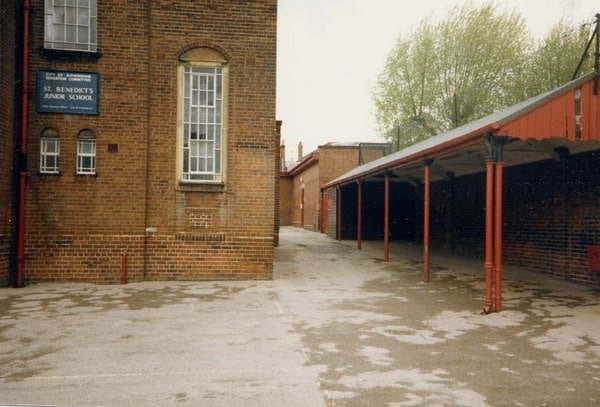
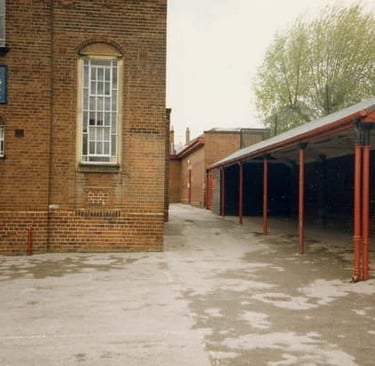
St. Benedict’s school in 1964, courtesy of Abz Hussain
We always had a very good cricket team at St Ben’s. This was in no small part down to the mixed-race nature of our team, which played to our advantage when playing schools from the more leafy wholly-white areas such as Moseley or Solihull. We had some West Indian kids who were very good athletes - strong and fast, allied with some Pakistani and Indians who could be very skilful. I was primarily a bowler and fielder, not a great batsman, but good for a handful of runs at the end of an innings when required. The only shot I could play with any degree of consistency was the cover drive.
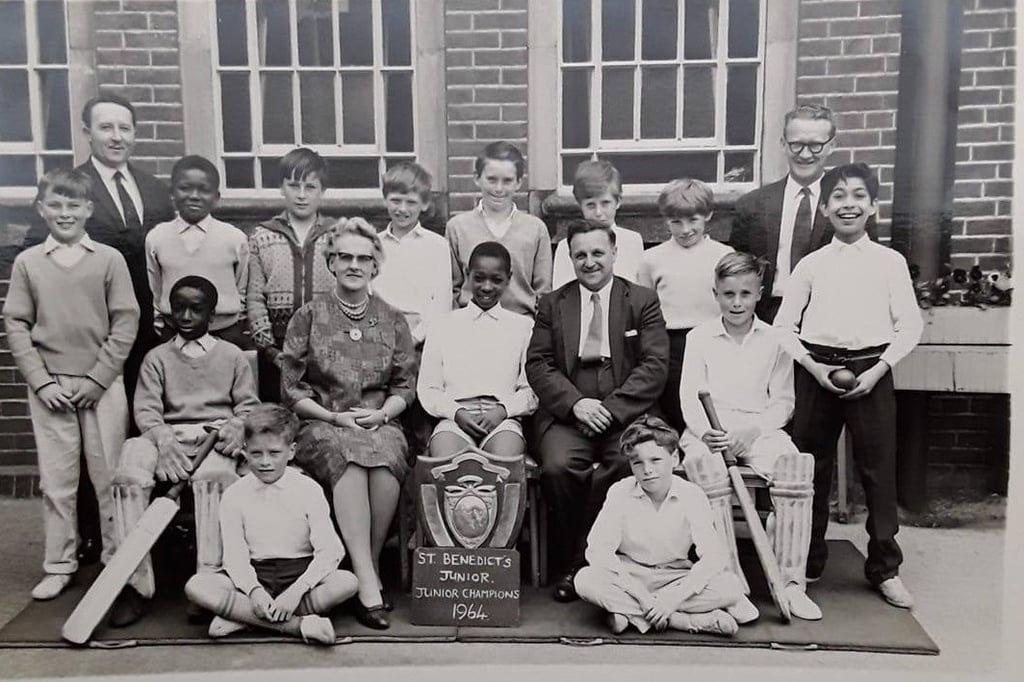
The cricket team in 1964. Mr Overd, the teacher on the left was always very kind to me. Miss Bagley was the headmistress. I don’t remember who the other teachers were.
The school is still there today, although even in the 1960s the buildings were in a shocking state. One day in Morning Assembly, part of the ceiling in the Hall fell in on us. It was only plaster, no stones or anything, but we trooped out of assembly, covered in plaster dust, looking for all the world like a splendid troupe of miniature ghosts. And it wasn’t even Halloween.
Once a year, they’d take us on a school trip to the Cadbury’s factory in Bournville. In those days, before the age of Health and Safety, we’d be allowed to wander around the production lines and the women on the moulding machines would give us chocolate. We’d gorge ourselves on fresh, warm chocolate and then, on the coach back to school, throw up en masse. Each time the coach went up or down a slight incline, a tsunami of brown frothy vomit would come careering up or down the coach and you’d have to jump up on the seat to get out the way.
Sixty years later, I’ve only just bothered to Google who St Benedict was. Apparently, St. Benedict of Nursia (c. 480–547 AD) was an Italian monk widely regarded as the father of Western monasticism. Born in Nursia (modern Norcia, Italy) to a noble family, he studied in Rome but rejected its decadent lifestyle to live as a hermit in a cave near Subiaco. What the fuck that’s all got to do with a rabble of underprivileged multiracial kids from Small Heath, I have no idea and it’s too late now to ask him.
Footwear and Chamber Pots!
We were poor, so one of the things Mom had to do was to take me to the warehouse of the Birmingham Evening Mail Christmas Tree Fund (a charity) for two pairs of boots every year, one black pair, one brown pair. They were horrible boots, like something from the 1940s. My skint, widowed mom used to hate going to collect them, I could sense she found it degrading. Then I passed the 11+ and my granddad found the money to buy me a proper pair of shoes for when I went to the Grammar School. I was dead proud of those shoes; in fact, I had a bit of a nascent shoe fetish for a while!
We weren’t by any means the only poor family in the area, though, in fact we were better off than some. Our house had a bathroom but many of the houses in Small Heath only had an outside toilet across the yard. One such house was my friend Geoff’s place and one of the jobs his family gave the eight-year-old Geoff was to go around the bedrooms collecting the chamber pots from under the beds and emptying them. I helped him with this a few times, in order that we could get it over and done with and progress to the more urgent matters of the day, such as playing football and climbing trees in Digby Park.
Geoff and I would carefully navigate our down the stairs, precariously handling smelly pots full of piss (or worse), across the back yard and empty them down the toilet before rinsing them out at the outside tap. It was OK as long as they weren’t full to the brim, in which case you had to be really careful not to spill much, at least when you were inside the house. Why on Earth two eight-year-old boys were entrusted with such a delicate job requiring no small degree of balance and concentration remains a mystery, but we survived.
As Bonfire Night loomed, we used to lurk outside the Monica pub with our Guy Fawkes at closing time, collecting money off all the drunk blokes as they stumbled out feeling inordinately generous. One memorable year, my older brother Ian who was a Mod, was getting ready to go out and asked, "where's my brown cashmere sweater?". I informed him that we'd used it on our guy and then burned the guy with it still wearing the sweater. It turned out that sweater had cost him a week's wages. It's a miracle I'm still alive to tell this tale...
Medical Issues
I seem to be prone to breaking bones. Before I was eleven, I’d broken my leg twice, once playing football and the second time in a spitting competition when I jumped out of the way of a lump of Gob being launched in my direction, stepped on a kerb stone awkwardly and broke my ankle. I also once managed to break my arm when we were playing some kind of human chain game, hurtling and swirling around the playground, which game had to end when I got my arm tangled up in the school railings and broke it.
Broken bones were one thing, but the real fear for me was the school dentist, which was somewhere by the corner of Yardley Green Road and Blake Lane. They were brutal and my teeth were rotten, so I was always having fillings, usually without anaesthetic – they didn’t seem to think that grubby kids from the slums were worth wasting valuable analgesics on, especially when the NHS dentist got paid the same whether or not they used painkillers. For me, things reached a head one day when I jumped out of the dentist’s chair, struggled free of the dental nurse’s grasp and ran away down the road. Mom was disgusted by the way the dentist had behaved and vowed never to make me go back there, in fact I was about 14 before I plucked up the courage to go to the dentist again. I’ve kept it up ever since and a succession of good dentists have now ensured that I have pretty good teeth, albeit with a mouth full of fillings and a couple of crowns.
There were several so-called ‘adventure playgrounds’ in the Small Heath and Hay Mills area. These generally consisted of rickety constructions that kids could clamber all over, jump off and swing on. I think most of them were old bomb sites from the War, places where buildings had been demolished and never replaced. Pretty much every day some kid would fall off some structure and break a bone or crack their head open. I was fairly lucky in that I only sprained my ankle a couple of times, although I’ve found that a sprain or torn ligament if often more painful than a clean break.
All things being equal, we kept East Birmingham Hospital Accident and Emergency Department pretty busy.
Making Ends Meet
By the time I was about nine or ten, Mom had started to get things sorted out. She’d got herself a couple of cleaning jobs on Coventry Road, one at the West Midlands Gas showroom and the other with a lovely old Jewish man called Hyman Willemchick who was an osteopath and naturopath. As well as cleaning for him, Mom used to look after the paperwork in his office, he wasn’t good at the admin side of things but just liked helping his patients. He was very kind to Mom and I feel he valued her help in getting his affairs in order.
Mom was skilled at budgeting and making ends meet. She would save some money each week in a Christmas Club so that we could have some presents and eventually managed to save enough for us to have a holiday each year at Mrs Kent’s boarding house at Ryde on the Isle of Wight.
I used to love going to the Isle of Wight. Mrs Kent and her husband Norman were a lively pair and would organise a weekly coach trip for their residents for a night out. To get to the Isle of Wight, we used to get a coach from Digbeth Coach Station at 6:30 in the morning, Mom would always, always, be travel sick on the coach but would be able to get some fresh air by the time we got to Southsea to catch the hovercraft over to Ryde. Quite often we’d take a boat trip around the naval dockyard at Portsmouth or go to Southampton to see the ocean liners – Queen Elizabeth, Queen Mary, Oriana etc. One time we even managed to get a tour of the luxurious QE2 while it was in dock, this was like another world to us.
One of Mom’s regular treats was to brew up vast quantities of Lemon Barley Cordial for we kids who were playing out in the street during the summer. It didn’t cost her much and saved a fortune in buying pop. My friends thought she was some kind of culinary genius, but all she was doing was boiling barley, squeezing a dozen lemons into the juice, adding some sugar and dishing it out in cups to us.
Simple Pleasures
Not having much never really bothered me as a kid. I wasn’t particularly materialistic and had low expectations. Grandad bought me a bike for Christmas one year, which came as a surprise, but Geoff (he of chamber pot fame) crashed it into a wall and bent the front wheel, so that was that.
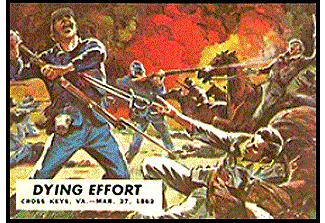
I was happy to settle for simple pleasures such as collecting stamps and bubblegum cards. There was one particular series of cards that were quite controversial. They were garish depictions of the American Civil War and efforts were made to have some of the cards taken out of circulation for fear of upsetting delicate little flowers such as the kids of Small Heath. Naturally, these cards became highly prized. I wish I still had them.
I never had regular pocket money, but sometimes a kindly relative would give me a couple of shillings. I’d save some of the money in a Birmingham Municipal Bank money box and then, at Christmas, treat Mom to her annual packet of Yardley bath salts, to which present she would always fake unbounded delight.
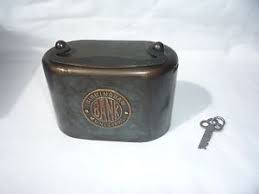
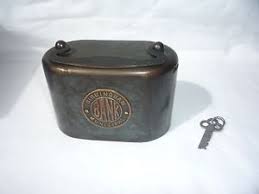
A Birmingham Municipal Bank savings box
Aberfan
Mom was never a particularly demonstrative woman; she tended to bottle up her emotions. One day in 1966 I came home from primary school to find her sitting in front of the television, sobbing uncontrollably. She jumped to her feet and grabbed me in a massive hug, crying all the time. I looked at the television she was watching – there were grainy black and white images of miners and local people digging through a wall of sludge with their bare hands, trying to rescue children of my age who were suffocating in the mud of a collapsed coal tip in a Welsh village called Aberfan.
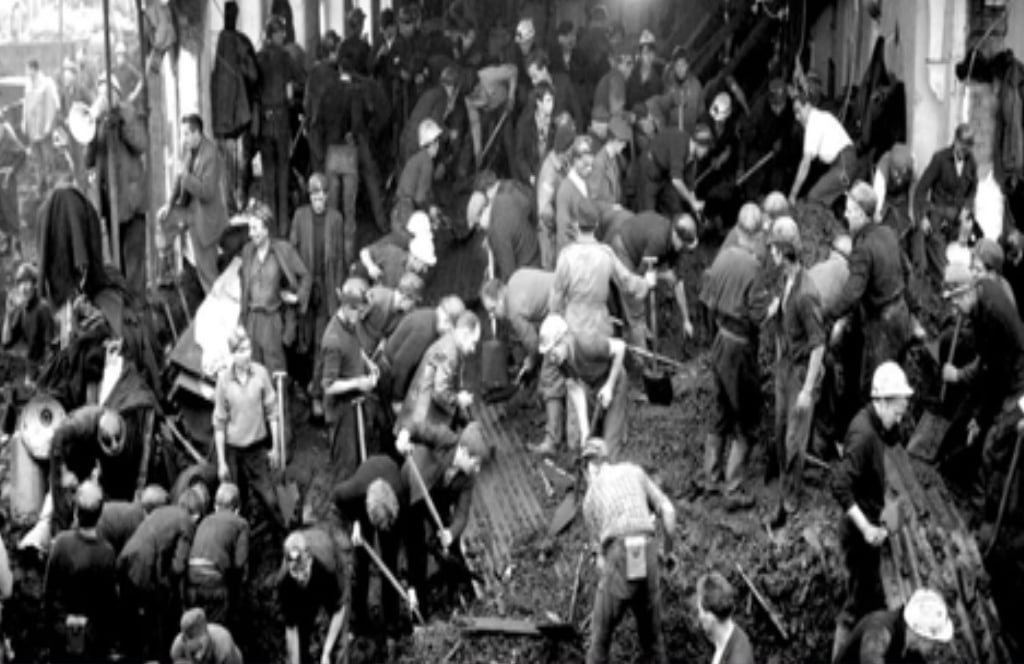
Miners and locals searching for children at Aberfan
I catch the football bug in 1966
As can be gleaned from the above, as a young kid I was more into cricket than football. Grandad had taken me to a couple of Villa games, but, to his lasting disappointment, it had never really captured my attention. Then, England became the host nation for World Cup 1966 and the entire country fell in line to support the event.
Villa Park was one of the venues for matches. West Germany and Argentina were amongst the teams that played there and Grandad loved it. There were a good number of German fans attending their games and he’d stand on the front step, looking at their cars with foreign numberplates, parked in Sutherland Street. Foreign cars were still a rarity in 1960s Aston. As he was loitering around before one game, a German fan assumed he was minding the cars and so gave him a few shillings as a tip. With no small degree of haste, he rushed around to The Pump Tavern and bought a couple of pints with his ill-gotten gains!
When Argentina came to town, they stayed at the Albany Hotel in the city centre. My sister Cynthia and her mate Mockey (Maureen Lockley) went to see them and ended up having a meal with the players. Mom was furious with her when she found out – what was a 14-year-old girl doing in a hotel with a bunch of ‘greasy Argies’? We never found out.
World Cup Final day came around, England vs. West Germany. My friend Robert Baddeley and I were mutually uninterested and so went to the museum in Birmingham to look at their impressive stamp collection – hundreds of Penny Blacks etc. After a while, we decided to head for home and watch the second half of the game, but we found that all the buses had mysteriously disappeared off the streets, which were totally deserted. Everyone was at home, glued to their TV sets. We decided to walk home to Small Heath, a distance of about 3 miles, not a big deal, we often walked to Town to save the bus fare.
About halfway home, an empty bus appeared on the deserted Coventry Road. We flagged the bus down and, thankfully, it stopped for us. The driver had a little transistor radio in his cab and he told us that England were 2-1 up and there were only a couple of minutes left. This looked like it was in the bag! Suddenly, though, the driver exclaimed “The bastards have scored! It’s 2-2”.
Returning to Monica Road, I went into the living room to join the rest of the family sitting around the old black and white Ekco television. We saw England grab two goals in extra time and lift the cup, presented by Her Majesty the Queen. Delerium.
The 1966-7 football season started a few weeks later, with whole nation on the crest of a wave. One Saturday, I was ambling along Coventry Road and met my brother Ian, walking in the opposite direction. I asked him where he was going. He told me he was going down the Blues (Birmingham City) and asked if I wanted to come along. With nothing better to do, I said OK and went to the game with him. It was a completely different experience to when I’d previously been to Villa games with Grandad, there was a livelier atmosphere, lots of joking and gallows humour because Blues were rubbish and always had been. Expectations were low and people just took the games as they came. I was hooked.
So, life in Small Heath had got off to a truly horrible start but eventually things had improved out of all recognition. It finally felt like home. Now, teenage years and puberty were looming, of which more later…
I hope you found this interesting. Go on - Have a coffee with me! You know you want to!