Backpacking
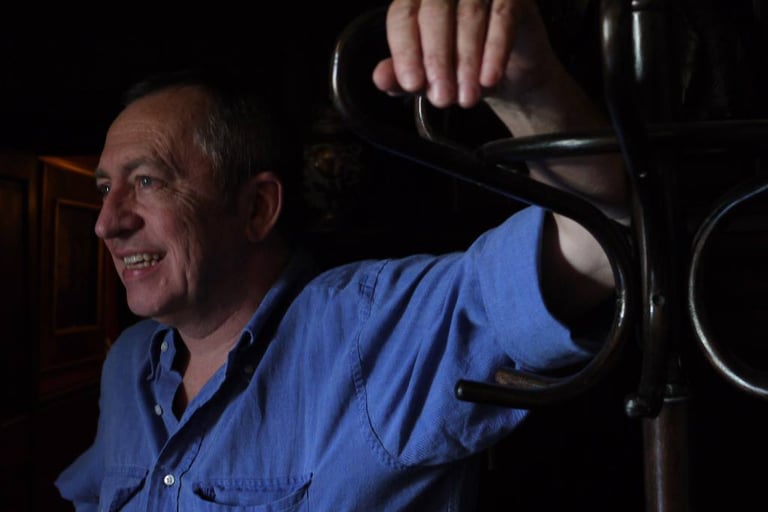
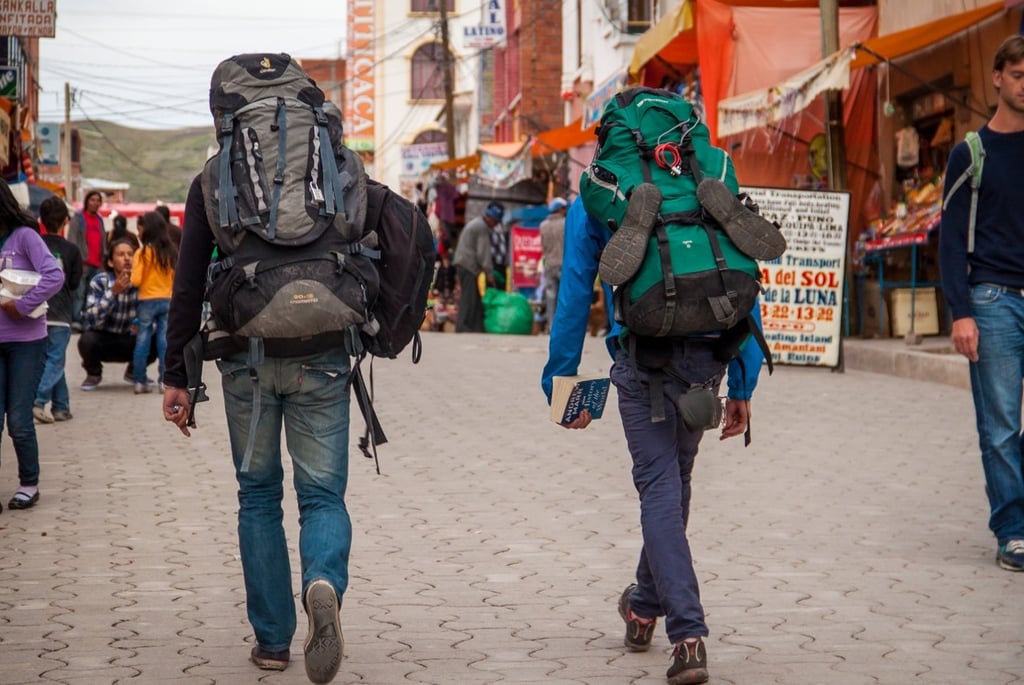
Between the ages of about 19 and 35, I was a bit of a phony backpacker. By this, I mean I was never what I’d call a ‘proper traveller’, doing the old Hippy Trail, working my way overland through Turkey and Iran, ending up in Kathmandu, Bangkok or Goa, because I was working full-time and studying. I did, however, do a fair bit of backpacking, preferring to take my holidays this way rather than on a package tour to Tenerife. I liked to just get a flight somewhere, turn up at the airport with a rucksack and head off in a general direction using local buses or trains with no fixed itinerary. I would occasionally be away for a month or so, sometimes six weeks, by banking my holidays and maybe taking some unpaid time off work.
Gobbed on in Köln
Janice and I did the traditional Interrail thing together, working our way down through Europe and ending up in Athens. We were on a shoestring budget of around £1.25 a day each, so would try to make sure we caught night trains to sleep on, or failing that, find somewhere to sleep rough. Quite early on in the trip, we found ourselves having to doss down in a filthy stairwell at Cologne station. We’d palled up with a Norwegian guy called Olaf and were in the process of trying to settle down in our sleeping bags when we suddenly became aware that there were some prostitutes spitting at us from a few floors up. I was all for having an argument with them until Olaf advised caution, saying:
“No, some of them are men dressed as women. They can be violent. Olaf got stabbed here last year”
At which point he lifted his shirt to reveal an angry-looking stab wound on his stomach. Heaven only knows what on Earth had brought him back to Cologne after an experience like that.
A gunfight in Belgrade
This would have been about 1976. We were in Yugoslavia and, as usual, trying to catch overnight trains for somewhere to sleep for free. The trains hadn’t worked out properly, so we were faced with having to change trains in Belgrade in the middle of the night, with about a two-hour wait in between trips. We decided to pop outside the railway station for a quick look around and suddenly became aware of bangs and flashes in the darkness. There was a lady who’d been trying to persuade us to stay in her house, so we asked her what was going on. She said there were a lot of drunken Serb and Croat soldiers having a ‘to do’ in the street and furthermore, this was something that happened on most Saturday nights. Not wishing to become embroiled in a battle between drunken armed servicemen, we scurried back into the station and jumped onto the first train that was leaving. We didn’t care where it was going, just needed to get away, sharpish.
The friendly farmer
We’d linked up with a college friend, Simon, somewhere on our travels and made plans to go to a place called Volos in Greece in order to meet up with a couple of other friends and spend some time on the beach. We’d had no idea where Volos actually was, just picked the place at random. It seemed that the nearest railway station was in Larissa, about 40 miles away, so after arriving at Larissa we started to work out how we could get to Volos, maybe by bus or something like that. Having studied Engineering, I can read a bit of Greek (we use Greek symbols a lot in Engineering formulae) but couldn’t see any signs that suggested there may be any buses going to Volos (Βόλος). We started hitchhiking along the road, but no-one was interested in picking up three dirty travellers laden with rucksacks. Hopefully, a bus would come along soon – we couldn’t face a 40-mile trek! Then, to our infinite delight, a sandstorm blew up. Things were looking pretty grim. As we struggled blindly through the storm, a farmer shouted something to us and motioned for us to come over. He pointed into his barn where there was a laden trailer with a tarpaulin draped over it. He lifted the tarpaulin and pointed underneath, implying that we could sleep under there and see the storm out. It was surprisingly cosy under the trailer, and we had a decent night’s sleep. The following morning, the farmer came to see how we were and theatrically pulled the tarpaulin off the trailer – it was laden with fruit, he was evidently off to market. As we rolled up our sleeping bags, he handed us some paper bags and pointed at the fruit. We twigged that he wanted us to buy some fruit in exchange for a night out of the storm, so we filled our bags with apples, nectarines, grapes and pomegranates. Then he gave us some more bags to fill, which was a worry because we had precious little spending money and it was starting to look like we’d be blowing a week’s worth on bloody fruit! Groaning under the weight of backpacks and bags of fruit, we rummaged about in our pockets for some drachmas and tried to see how much he wanted. The farmer was profoundly insulted and mortally offended by this – he’d intended the fruit as a free gift to see us on our way. He was visibly upset and it took sincere apologies from us before he would smile again.
We set off back on our hitchhiking saga and quite quickly got a lift from someone who spoke a little bit of English. He told us that there was actually a local train service from Larissa to Volos and deposited us at the nearest station on the route. We got to Volos to find it was a bigger place than we’d anticipated, more of a town than a village, but had a campsite on the edge of town, so we were able to pitch our small tents there (we usually carried a tent) and stroll down to a quite decent beach fringed with shady trees to lounge around under when the day got too hot. After seeking out our friends Charlie, Annika and Richard who’d arrived a couple of days earlier, we were able to have a very pleasant few days R&R on the beach, which is where the shower comes in:
The cheap campsite had a very basic shower block, and we were absolutely stinking filthy, not having had a proper wash for several days. It was utter luxury to be able to get clean and I soon made my way into a booth, which was a very simple construction made of concrete blocks with a brightly painted door and a fixed showerhead. I’d been wearing jeans and a cheesecloth shirt for about a week and when I took my shirt off I could see my torso was grey with accumulated grime that had filtered through the cloth. I wore glasses in those days, couldn’t afford contact lenses, so took off my specs and put them in the pocket of the jeans I’d just taken off. Squinting short-sightedly around the booth, I could just about make out a rather ornate-looking yellow and blue hook on the door, so I went to hang my jeans on it. The hook ran away. It was a feckin’ big spider, about four inches across! I hung my jeans on the floor and had a very cagey shower, me watching the spider, the spider watching me.
From Athens to Italy
I was making my way from Athens to Italy. The best way to do this on a budget was to get the train to Piraeus and then catch the overnight ferry to Rimini, as per usual, sleeping rough on the ferry to avoid paying for accommodation. Hanging around for a day or two in Athens, I was looking in a shop window, turned around and bumped into someone with my rucksack. I apologised instantly and then saw the person I’d bumped into was none other than John Hackett, a classmate from Waverley Grammar School (see the section marked ‘Waverley Days’). John had been walking behind me, totally unaware that I was there and I, of course, was unaware that he was there. What are the odds of two kids from adjacent streets in Small Heath, literally bumping into one another on a busy Athens thoroughfare?
After reaching Piraeus and having met up with a friend from Birmingham, who was working as a barmaid there, Janice and I clambered aboard the Rimini ferry as dusk fell. Posh people had cabins, but we, of course, slept out in the open on the top deck. Luckily it was a gorgeous evening and, after having chatted with travellers from other parts of the world, we fell asleep. We were woken at dawn by a bit of a ruckus – a huge shoal of flying fish had come alongside the ferry and were playing in the wake, jumping out of the water and gliding along for a hundred feet or so at a time. Having never encountered flying fish in Small Heath Park Lake, this was a real novelty. We celebrated by splashing out on luxurious breakfast of Coca-Cola and a feta cheese roll.
On arrival in Rimini, we were approached by a man, a complete stranger, who said he’d show us around. We were a tad suspicious but decided to go along with this. He hailed a taxi and whisked us off on a tour, showing us what sights Rimini has to offer. We really couldn’t work out what was his motivation, but were quietly impressed by what a nice place it is – we’d expected a busy port but found instead a very pleasant seaside town with beaches and street cafes etc. The man said he owned a small restaurant and would treat us to lunch. By now we were getting very suspicious – where was all this leading to? Would he expect us to pay, or was he interested in Janice? We simply couldn’t fathom out what was going on. We had a very nice Italian meal for lunch and then he said he’d take us to the railway station but first, could he show us something? He took us to a wall in the restaurant which was festooned with postcards from all over the world. He asked us, if it wouldn’t be too much trouble, could we possibly send him a postcard of our home town? That was all he wanted, a postcard to show our appreciation for his amazing hospitality. Italians, eh? You’ve gotta love ‘em
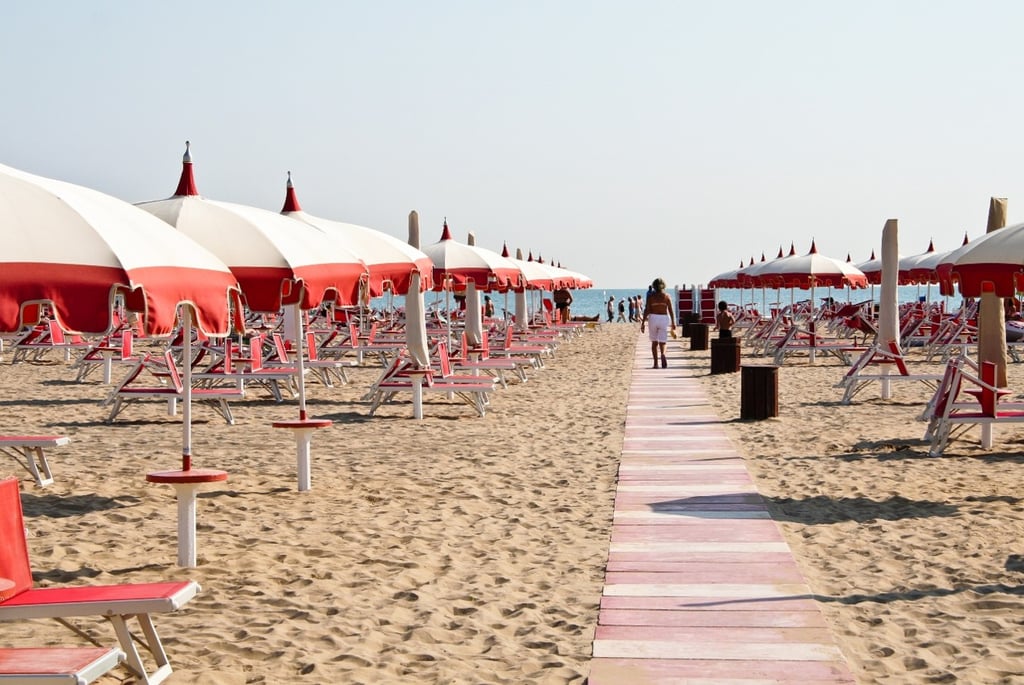
Rimini Beach. We’d been expecting a scruffy little port
Passeport!
One time I’d been sleeping on a train, in a couchette with five other people. For the uninitiated, a couchette is a downmarket version of a sleeping carriage – the seats fold flat to form a big bed and half a dozen of you sleep side-by-side. It’s OK, except for when someone needs to use the toilet and has to clamber over about four people to get to the carriage door. The train stopped; I was fast asleep.
I was rather rudely awoken by someone prodding me in the face with a rifle. We were at the Greek/Turkish border at a time when relations between the two countries were very tense. I was very tanned. A Turkish policeman had assumed I was Greek and was waking me up, simply saying “Passeport”. Somewhat alarmed, I hastily rustled around and dug out my passport. On seeing it was British one, the policeman broke into a broad grin, didn’t bother to look inside the passport, patted me on the shoulder and went off to find some poor Greek sod to intimidate at gunpoint.
So, this must be Rome?
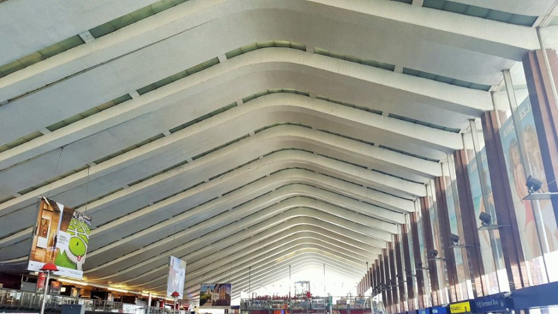
Rome Central Rail Station © showmethejourney.com
We’d been in Rome for a few days, doing the tourist thing and had made arrangements to meet up with Charlie at the station at midday on a Tuesday. He was coming in from Milan or somewhere. We waited at the appointed time, but he didn’t show. The following day, we decided to leave Rome and went back to the station. Hanging around in the cathedral-like departures hall, we saw a traveller have his rucksack taken off him at knifepoint by a small gang. We would be pleased to get out of this place. Suddenly, we spotted Charlie in the distance stumbling along – he’d obviously been delayed and had just arrived in Rome very flustered and tired. Janice started shouting “Charlie! Charlie!”. Her high-pitched voice was echoing resonantly around the cavernous roof. Charlie paused; confused, and started looking up at the ceiling. He later told us that he thought “So this is the Holy City? The angels are calling me”.
After chatting with Charlie for a while, we got aboard our train to Naples. We were on our way to see Pompeii, having done it in History at school. About halfway to Naples, the train stopped in a siding, it had been stationary for ages when a guard came along asking for tickets. He looked at our InterRail cards and started talking sternly to us in Italian, we hadn’t the foggiest idea what he was on about. Within minutes, the carriage was in uproar, every single person started shouting at the guard, gesticulating wildly, slapping their foreheads, making rude gestures at him and generally carrying on. We were completely mystified until a young girl came to our rescue…
She spoke excellent English and explained to us what was going on. Apparently, we were on the fast train, but our tickets only allowed us to use the slow train. So what was the issue? We could just get off. She said that although we were on the fast train, while we’d been in the sidings, the slow train had gone past us, so the people in the carriage, already frustrated and feeling ripped-off, had decided to take their frustrations out on the hapless guard. She started to translate some of the insults for us:
“That man just said the guard is nothing but a filthy stinking pig. Oh dear, that lady over there just said he is the son of a whore”.
She reached into her bag. “Would you like a sandwich? I have spares” So we sat munching sandwiches, entertained by a full-blown Italian argument. The guard surrendered under extreme duress and we stayed on the train all the way to Napoli, feted as the unwitting heroes of the carriage.
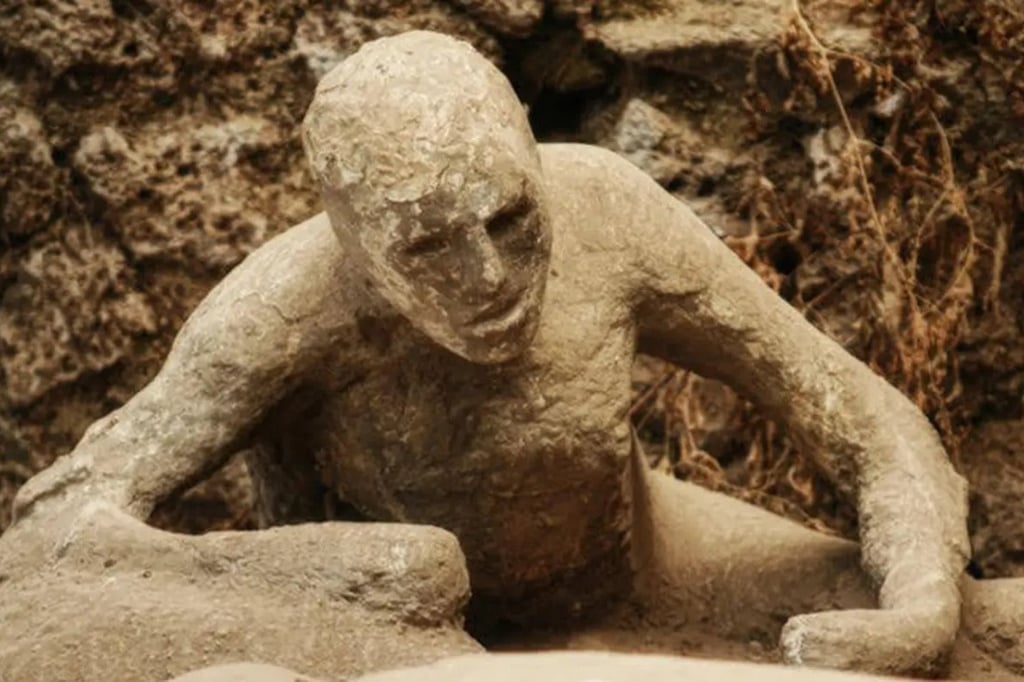
A victim of Pompeii © animalia-life.club
I found Pompeii distressing. Seeing the preserved casts of the bodies of those poor people who’d been choked, suffocated and burned to death by hot gases and ash, I couldn’t help thinking about how terrifying, painful and miserable their deaths must hav been.
Alone in Jerusalem
I was travelling alone and, after a reasonably long flight had checked into a youth hostel in Jerusalem. It was only late afternoon, so I decided to go for a random wander around town. By chance, I found myself on the plateau overlooking the Western Wall, or Wailing Wall as it’s sometimes called. Gentiles aren’t normally allowed down to the Wall as it’s sacred, but I was able to watch from about 100 yards away as the male Jewish worshippers prayed, nodding their heads with a fervour and pushing little bits of paper into the cracks between the huge blocks of stone. It was quite a sight. Up above the Wall is the Al‑Aqsa Mosque. It was sunset and the muezzin at the mosque was calling the Muslims to prayer, so from where I was stood, I could hear the Hebrew prayers being recited and simultaneously the Arabic incantations ringing out. Just a few hours before I’d been bored in Heathrow Airport but now I felt a very long way from home in this alien environment.
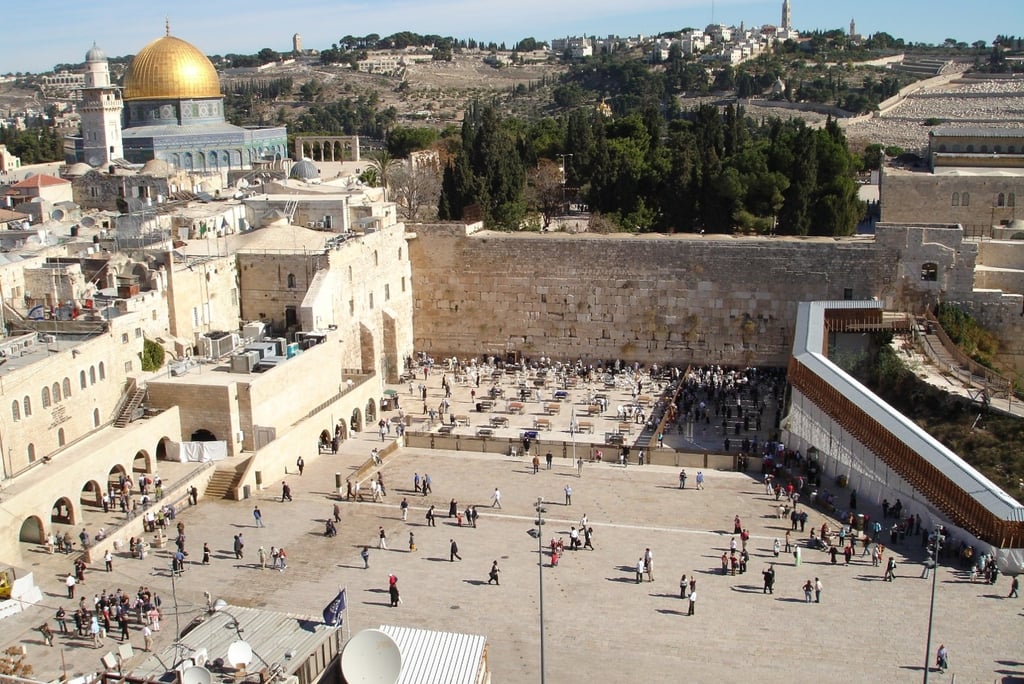
The Western Wall and Al-Aqsa Mosque ©Holylandmark
The Golan Heights
I was in Tiberias, which is a lovely place on the Sea of Galilee, with some of the best reasonably-priced seafood restaurants I’ve ever encountered. Met up with a Palestinian taxi driver who offered a bunch of us a tour of the Golan Heights. He had some kind of scam going, whereby he’d drive from village to village on the Heights, buying stuff in one village and selling it to the next. He told us he regarded himself as an Israeli citizen, and had fought for the Israeli Army in one of the wars on the Heights, often fighting against his own relatives who were on the Syrian side. This region was, and still is, seriously screwed up! He asked if we’d like to visit Syria and off we headed. We rose onto a bleak, hot, dusty mountainside up in the middle of nowhere, to find ourselves at a United Nations checkpoint, just a light blue cabin by the side of the road and a barrier. With no fence either side of it. The checkpoint was manned by a solitary Austrian soldier, alone in the middle of nowhere, what on Earth the poor fucker was supposed to do if fifty Syrian tanks came lumbering over the horizon, Heaven only knows! Our driver bribed the soldier with a carton of cigarettes, the barrier was raised (we could, of course have just driven around it if we’d been minded to) and we entered Syria where our guy continued his day’s business, trading between the villages. Israeli-produced goods were in high demand in Syria, and he was able to trade them easily, buying some Syrian goods which he’d be able to sell on the black market to his Palestinian friends back home in Israel.
The Good Fence
Up on the Northern border, where Israel meets Lebanon, there used to be a steel fence called The Good Fence. Every day, Lebanese people who worked in Israel would come to the fence in buses, walk through the gate unopposed and then get on another bus which would take them to work. The gate would generally be open, so we wandered through it, got onto a local bus, paid in shekels, and spent a day mooching around in Southern Lebanon. We got as far as Tyre, which is one of the oldest occupied cities in the world, dating back to the Phoenician days, about 900 BC, although there had been people living there since about 3000 BC. Lebanon’s an interesting country, about 50/50 Muslim and Christian. I got the feeling that they were a very peaceful and tolerant people, quite reserved in many ways.
Disillusionment
I’d grown up in the 1960s / 1970s and watched the TV news reports on the Seven Days War and the Yom Kippur War. I’d also read ‘Exodus’ by Leon Yuris and was profoundly impressed by the heroism shown by the Israeli settlers who seemed to have been under constant attack from all and sundry. I really believed the Israelis were the good guys, so it came as a profound shock when I toured the country and saw with my own eyes the casual brutality with which the native Palestinians were being treated on a daily basis. I saw elderly ladies, just doing their shopping, being jostled in the street and pushed into the gutter by jeering armed uniformed thugs (male and female), I saw children being spat at when they were simply innocently playing. I spoke with old men who showed me the deeds to their family home, issued under the British Mandate, homes that had been taken from them at gunpoint and handed to Israeli settlers. These old people still hoped, in vain, that justice would be done and one day someone would give them their house back. I realised that my media-fuelled preconceptions about Israel were 100% wrong, the real baddies were the Israelis, not the Palestinians who I always found to be impeccably well-mannered and hospitable, despite everything that was being done to them.
The Felucca Trip
Touring Egypt with Sam, my girlfriend at the time, we took a trip from Luxor to Aswan on the Nile on a felucca. It takes three or four days, depending on the wind conditions.
There were two feluccas travelling together and, before leaving Luxor, each of we travellers had to show we were safe by jumping off the boat, swimming all the way around it and then climbing back on board at the point where we’d jumped. I’ve always been an absolutely lousy swimmer, so for me this was quite an ordeal, the others would strongly circle the boat on a powerful front crawl, whereas I had to resort to a stately breaststroke, somewhat reminiscent of an elderly lady in the early bird session at the local baths. All that I was missing was a flowery bathing cap! Anyway, I never drowned, so was allowed to go on the trip.
Each of the feluccas had about eight travellers and a crew of three Nubians. There wasn’t much else to do other than sit on the deck, drink plenty of fluids in the searing Sahara heat and chat with your fellow passengers. I’ve always had an interest in languages and have a reasonably good ear for picking up a few words I most languages. I’ve got by in Hebrew, Greek, Welsh, Russian and now, thanks to the Nubians, was able to learn a few words of Arabic. It seems that there are several tribal versions of the Nubian language, which is predominantly oral with little or no written versions, so to make life easier, the Nubian sailors tended to resort to Arabic when speaking with one another.
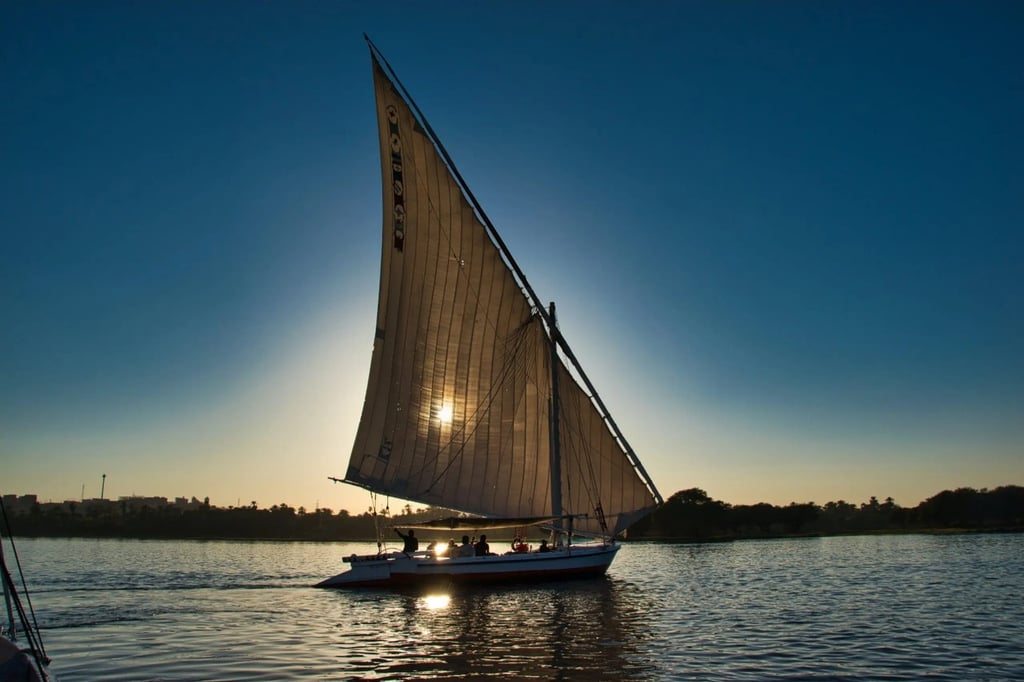
A felucca. ©traveltalktours.com
Every evening, we’d run the boat aground on the bank, the Nubians would produce some chicken and beans from under the deck and we’d have a barbecue. One evening, some figures appeared out of the darkness, drawn by the light of our fire and the sound of our voices. It was quite eerie and a tad frightening, but they were fine, just a local nomadic tribe who’d stumbled across us. We invited them to join our meal and then they treated us to a song, which apparently was the oral history of their tribe. It went on for bloody ages! The Nubians were transfixed. We were bewildered. After they’d finished it became apparent that they expected us to return the favour so we produced lusty choruses of God Save The Queen, Advance Australia Fair, Deutschland Uber Alles, O Canada and then finished with a rousing theatrical dance rendition of the Hokey Cokey, which they absolutely adored. Then, they disappeared off into the night as silently as they’d arrived.
On another occasion, the Nubians became rather animated because we were slightly ahead of schedule and so were able to attend a market in a remote little settlement out in the desert somewhere. We ran the boats aground on the bank and sat around while they wandered off over the horizon to get some camels. They returned with the most evil collection of camels you could imagine. We’d ridden the tame tourist camels you get at the Pyramids, but these sods were completely different beasts, they were downright nasty, they resented being ridden, would spit at you if you got in front of them and were stubborn in the extreme. We’d all adopted galabeyas as the de rigeur clothing for the desert – a galabeya with nothing worn underneath is by far the best way to keep cool in the desert, so we were told to use them, allied with sunglasses to hide our blue eyes and headwear to hide our fair hair in order to avoid being objects of curiosity in the market. We drew a few amused glances but were generally left to our own devices.
Toileting on the felucca was a novel experience. The males would just stand up and wee over the side and the females would hang onto a rope at the back of the boat and plunge their arse into the water. For a poo, we’d hold it in until the boat had been run aground for the evening and then amble off into the desert, dig a small hole, squat over it and then bury the faeces and toilet paper in the sand. One night, after the barbecue and before returning to the boat to sleep on the deck, I was squatting there, minding my own business (excuse the pun), when one of my boatmates appeared. She was a drop-dead gorgeous Canadian girl, looked like a model. She cheerfully started a conversation with me, dug herself a hole right alongside mine, hitched her galabeya up and then proceeded to part-fill the hole with dung, chatting merrily whilst she did so. Moments like these make one realise how reserved and uptight we English are when considering basic bodily functions, compared to other more laid-back nationalities. I mean, most of us have taken a poo at some time in our lives, haven’t we?
Ventimiglia
Jan and I were making our way back to Britain, having visited Italy. We’d almost run out of money and had precious little left to spend on our way through France on our way home. We stopped off in Ventimiglia for a couple of days so decided it would be a good idea to ration our money by getting blind drunk and sleeping in the tent for the afternoon. We bought a baguette, some cheese and a huge bottle of really cheap table wine, had something to eat, drank all the wine and crashed out, lying on top of the sleeping bags because it was sweltering hot in the tent. After a few hours, we awoke to find we’d been eaten alive by mosquitoes. Jan wasn’t too bad, but I’m one of those people who react badly to insect bites and bee stings, I think I must have monkey blood or something! I was covered in large, red, angry, itchy swellings. I looked like the Elephant Man on a bad day. We went to a local pharmacy to see if they had any antihistamine cream, which they did have, and in the process I learned a very useful Italian word – ‘zanzare’, which means ‘mosquitos’. All these years later, I still remember that word.
Kathmandu
Sam and I were in Kathmandu, having a look around the city before heading off to climb Annapurna (see below). Sam’s sister was working in Nepal at the time and had learned a lot of the language, so her presence and local knowledge was invaluable. Probably the most well-known place for backpackers to stay there is the (almost legendary) Kathmandu Guest House.
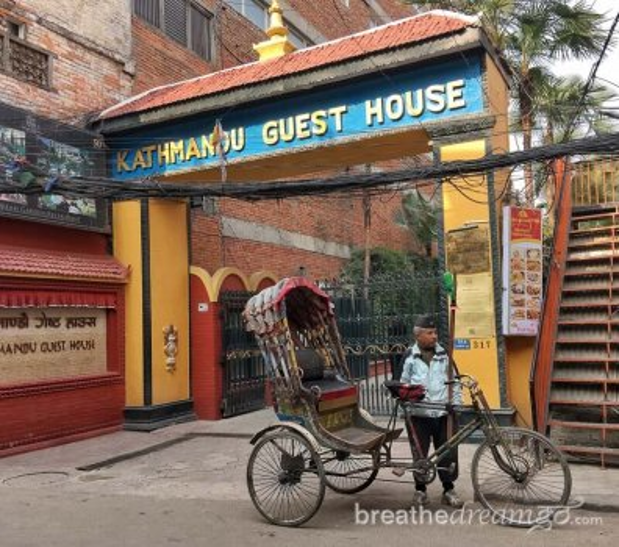
We’d only been in the Kathmandu Guest House for a couple of days when Sam developed a nasty dose of dysentery. Trust me, sharing a poorly ventilated, hot and stuffy en-suite room and bed with a companion suffering from dysentery is not an experience one would care to repeat. The guest house had a resident doctor, accomplished in treating Westerners with this kind of disorder. He filled her up with a concoction of drugs and ordered her to go to hospital when she got back to England, stop taking all the stuff he’d given her, have proper stool and blood samples taken and then get some medication best suited to whichever strain of the disorder she had. The doctor spoke really good English, so I asked him where he’d learned. He told me it was a precondition of him enrolling at medical school, so I asked him where he’d studied. He said Harvard University. A Harvard-trained doctor, working in a Nepalese guest house? You couldn’t make it up.
Annapurna
We’d procured trekking permits to climb Annapurna, a mountain which, in the mountaineering fraternity is regarded as ‘cooler’ than the tourist-infested Everest. Espousing the offers of a sherpa or two, we elected to carry our own gear up the mountain. The plan wasn’t to get to the top – we had neither the time nor the equipment for that, but we hoped to make it as high as Base Camp One or Base Camp Two. You have to dwell for a couple of days at each base camp in order to acclimatise to the lack of oxygen in the thin air – let your lungs adjust or you can become quite ill.
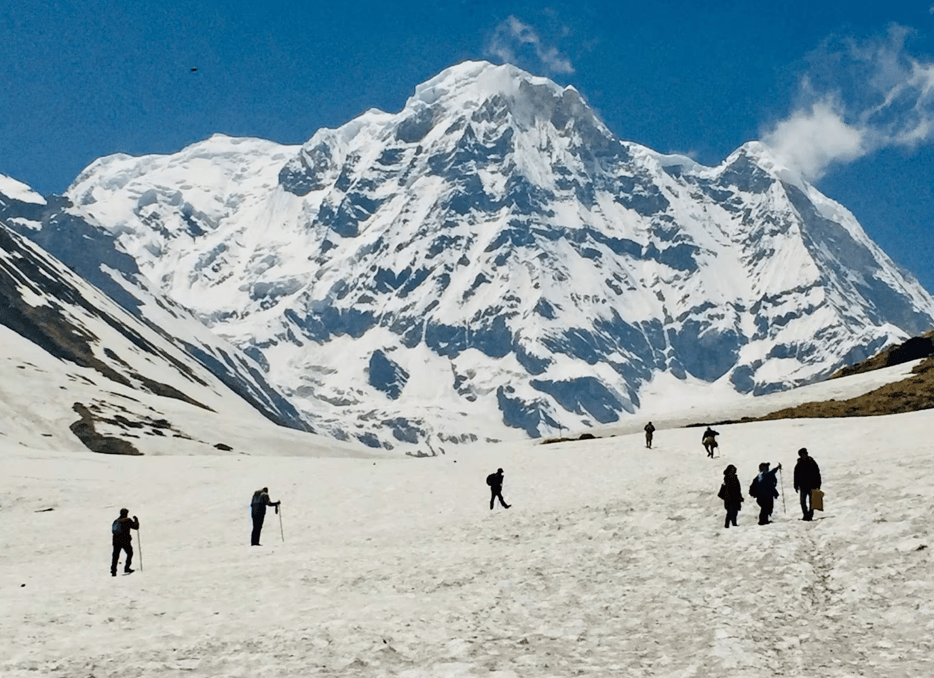
Annapurna from Base Camp One (at 13,500 feet)
Early on in the walk, we came across a bizarre, Pythonesque sight. There was a man in a smart, pressed, beige uniform sitting at a desk alongside the path. He was in the middle of nowhere, probably about 6,000 feet up the mountain. His job was to check that everyone had a valid trekking permit which he’d stamp before letting you pass. There were no buildings anywhere near him, so where he lived is anyone’s guess.
Sam was powering along, showing remarkable resilience for someone who’d so recently had dysentery, but I found myself really struggling, I just had no energy, my legs felt really heavy and the rucksack felt like a ton weight. I couldn’t work out what was wrong until I realised it was the fact that we were in the process of moving from London to Birmingham and I’d spent all winter driving from Twickenham to Solihull and back every day, leaving home at about 5:30 in the morning and getting back at about 7:00 in the evening. I was physically drained and in no condition to climb 15,000 feet up a mountain, carrying a 50-pound rucksack. Before we’d even reached Base Camp One, I bailed out, left Sam and her sister to carry on and turned around to spend a couple of days walking back down the mountain to Pokhara, which is a beautiful little city by a lake.
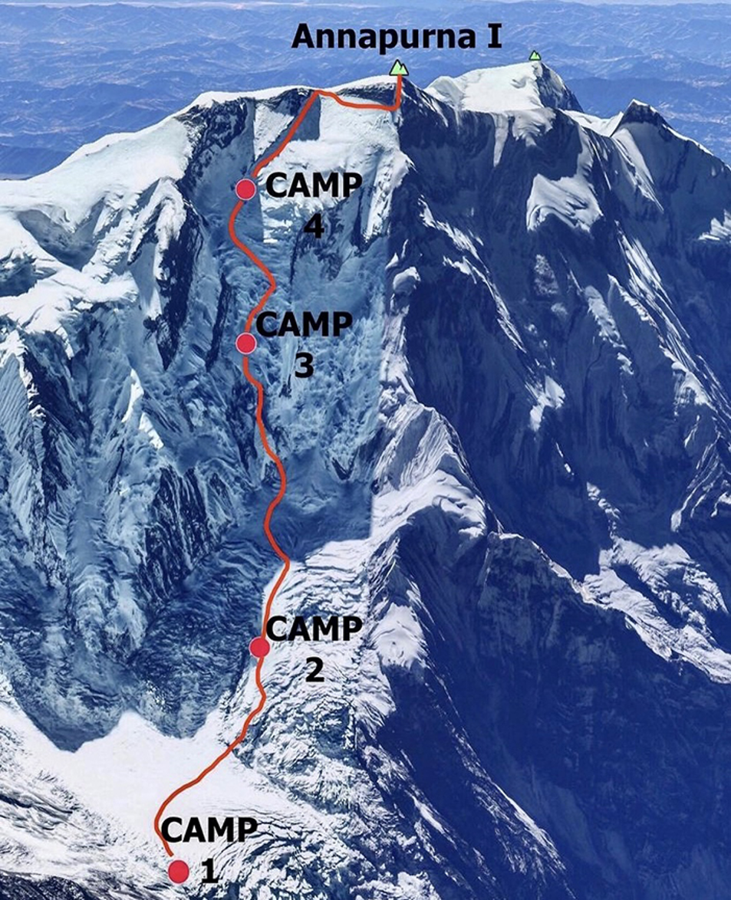
The Annapurna Base Camps
The Annapurna region is notable for the large numbers of ex-Gurkha soldiers you meet. There are little ‘tea shops’ on the trail. These are just peoples’ houses – shacks, really, where you can buy a cup of tea (no milk), sometimes a bite to eat (always daal and rice) and, if you need, rent a piece of floor to sleep on. A lot of these places are run by retired Gurkhas who like to proudly show battered old photos of them in their uniform and the photo of Her Majesty the Queen that they inevitably seem to have on the wall.
I was sitting outside one of these little places, talking with a teenage lad who wanted to practice his English. A little boy, about eight years old, came plodding methodically up the mountain, wearing just flip flops and football shorts, carrying a big bag of cement on his back. I don’t think I could have carried the bag for long. The teenager shouted across to him, they exchanged a few friendly words and the little lad continued on his way. I asked my companion what they’d been saying. He said:
“I asked him if he’d like a cup of tea, but he said he was OK and wanted to carry on”
I said: “What was he doing?
“He’d been to Pokhara to get some cement for his father who’s building a wall”
Me: “How far has he got to carry the bag?”
“Oh, his home is about eight days away”
I eventually got to Pokhara, checked into a hostel, got cleaned up and lounged around for a few days. I was disappointed at having failed to get very far up the mountain but put it down to experience. I realised I what I needed was a holiday, not an endurance event.
Strolling around town one day I became aware of a group of people gathered together around something, so, being a nosey sod, decided to go and have a look. Slipping through the throng I found myself watching a street dentist at work. There was some poor bastard sitting on a simple wooden chair, his knuckles white as the gripped the side of the seat. A dentist was drilling away at his tooth using a drill powered by a modified treadle-powered Singer sewing machine. As you’d expect, there was no anaesthetic. The crowd was jostling or position to get the best view over the dentist’s shoulder into the patient’s mouth and voicing their unqualified opinion of his handiwork. It made my teeth ache just to watch.
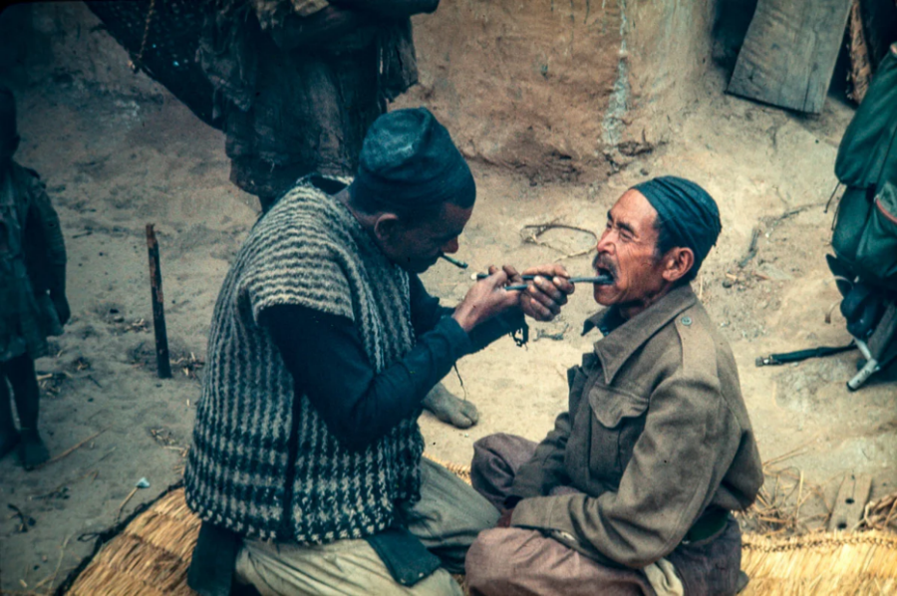
A Nepalese street dentist ©idsn.org
The Poorest Place?
I can’t remember quite how, but one time Sam and I found ourselves in Dhaka, Bangladesh. We were on our way to somewhere and had a 24-hour stopover. The airline had arranged for the transfer passengers to stay a night in a local hotel, so a bus collected us and took us there. Dhaka is an absolutely massive city, with very busy roads, so the bus had to stop quite frequently. At every single stop, the bus would be approached by crowds of beggars, many of whom would be holding up small children they had maimed in order to make them more effective beggars. It was horrible to see.
We got to the hotel, which was actually quite pleasant, the rooms were air conditioned and comfortable, with each room having a balcony. Sam and I went out on the balcony and looked down at the scene below – directly across the street was a huge shanty town consisting of family dwellings made from a combination of cut-up cardboard boxes and sheets of corrugated iron, there seemed to be thousands of people living there in shocking conditions with no sanitation or clean water. It seemed so unfair that there we were, in our four-star air-conditioned luxury while just a few yards away people were clinging desperately to existence. Sam drew my attention to the parapet above the balcony where there was a line of vultures fixated on the shanty town, waiting for the next person to die. This would have been some time in the early 90s – I understand the vulture population of Dhaka has since plummeted, owing to some disease they catch from infected carrion.
In the morning, before we transferred back to the airport, the hotel provided us with a buffet breakfast. There was a choice of chicken curry, goat curry or vegetable curry, that was all.
I’ve never been back to Bangladesh since and have no particular desire to ever do so.
A Terrorist Arrives?
We were going to Thailand, backpacks at the ready, and were flying on some cheap Arab airline, I forget which one. The plan was to have a short stopover in Bahrain, just a couple of hours. All was going well at Heathrow until we got to the Gate, checked in and sat waiting for the boarding call. It never came. After sitting at the Gate for about three hours and repeatedly asking the attendants what was going on, we were told to go back to the departure lounge for further instructions.
It turned out that there had been a bomb scare on our plane. They taxied it off to some remote corner of the Apron and unloaded all the luggage onto the ground, providing us all with meal vouchers in the meantime. Then they took us out to plane, one minibus at a time, where we had to identify our luggage, have it x-rayed on a portable machine and witness it being re-loaded onto the plane, then go back to the departure lounge to carry on waiting. By the time the plane had been reloaded, with no bombs being found, we were about six hours late taking off.
We arrived at Bahrain Airport in the middle of the night. All flights for the day had ceased and the terminal was eerily quite, they’d kept a customs desk open for us and slowly processed us all through. Sam went through before me. My turn came and the customs officer studied my passport very carefully, then called a policeman over. They exchanged a few words in Arabic; the policeman pulled out his gun and took me into a side room at gunpoint. A more senior policeman who spoke English came in:
“You are Engineer, yes?”
“Yes”
“Do you know anything about explosives?”
“No, only cars and computers”
“Your passport says you have visited Israel in the past”
“Yes”
“Why do you visit Israel”
“Just for holidays and sightseeing”
“So why are you coming to Bahrain”
“I don’t want to be in Bahrain. I’m only passing through, changing planes”
“But why Bahrain?”
“As I said, I never intended to be in Bahrain”
And we went round in circles, him asking the same questions over and over again about Israel and Bahrain, me giving the same answers.
Through the office window I could see Sam alone, sitting on our rucksacks. Every other passenger had been taken to a hotel, but she was steadfastly refusing to go without me, arguing with the cleaners and other staff, just sitting alone in a semi-lit, almost deserted terminal building.
After about an hour, some guy turned up carrying a sheet of paper with Arabic writing on it. The policeman said:
“We are going to keep your passport overnight. In the morning, it will be returned to you at the hotel and then you must leave the country immediately. This is a receipt for your passport; you have to sign it”
“Piss off. I’m not signing something I can’t read. It could be a confession, or anything. I’m not letting you trick me into anything. I’ll sleep in this chair overnight and keep my passport with me”
“It’s not what you think, I promise you, it’s merely a receipt”
“Nope. I’m not signing anything. I don’t trust you”
Sam was by now lying flat on top of the rucksacks, the terminal was dark and deserted.
After a short time, a chap from the British Embassy turned up. It was about four o’clock in the morning, they’d got him out of bed, but he was in surprisingly good spirits.
“What’s the problem?”
“They want me to sign this, but I don’t know what it says”
He read the piece of paper:
“No, you’re OK it IS just a receipt for your passport, just sign it and they’ll let you go”
So, I signed it, met up with Sam and the Embassy chap accompanied us in a taxi to the hotel.
The following morning two policeman turned up with instructions to keep me under close guard, they gave me my passport back and then they took Sam and I on a tour of Manama in their police car. We went for a hot, sweet black coffee in a bar somewhere and then they took us to a souk to buy some souvenirs of Bahrain, which they haggled for on our behalf, the market stall holders didn’t look too inclined to argue too much with the police, so we got a good deal. The policemen seemed sorry to see us go, they didn’t speak any English, but it was clear they’d quite enjoyed a day off normal duties, acting as tour guides, drinking tea and eating falafel at the souk.
I don’t think I’m allowed to ever go back to Bahrain, although I quite liked the place, despite everything.
Better Finish on a High Point, Col!
I’m conscious that quite a large part of this piece has been a tad unpleasant – spat at by prostitutes, tangled up in a gunfight, shitting in a hole in the desert, being arrested, seeing some terrible poverty, distressed at the corpses in Pompeii and so forth. I only write about these things because I hope you’ll find them a bit out of the ordinary. I’d like to stress that, overall, backpacking is a great way to see the world and meet some interesting people. I shall finish with a picture of Machapuchare, the absolutely gorgeous mountain that stands majestically alongside Annapurna. It’s also known as ‘fishtail’ because of its twin peaks and, as you ascend Annapurna you get tremendous views of it from different angles. It’s never been legally climbed as the Nepalese government won’t issue permits for it. It always seems to attract the most beautiful light. Lifetime memories of stunning views like this make all the bad stuff worthwhile:
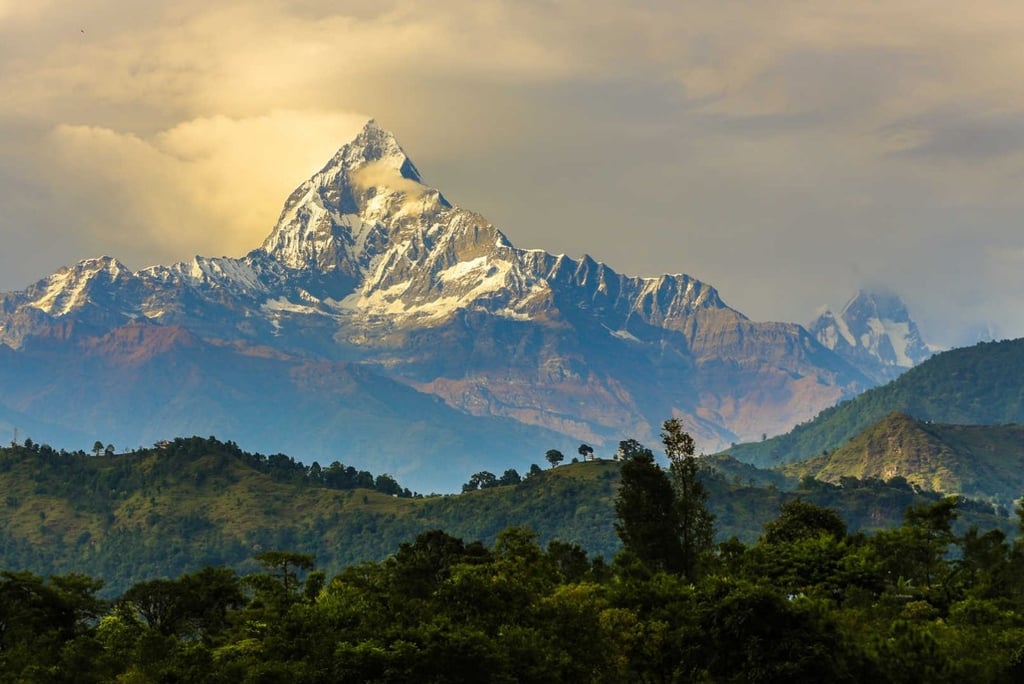
Machapuchare
I hope this was of some interest. I appreciate you can’t treat me to falafels from the souk or offer a selection of breakfast buffet curries, but a cup of coffee would be greatly appreciated. Have a nice day!